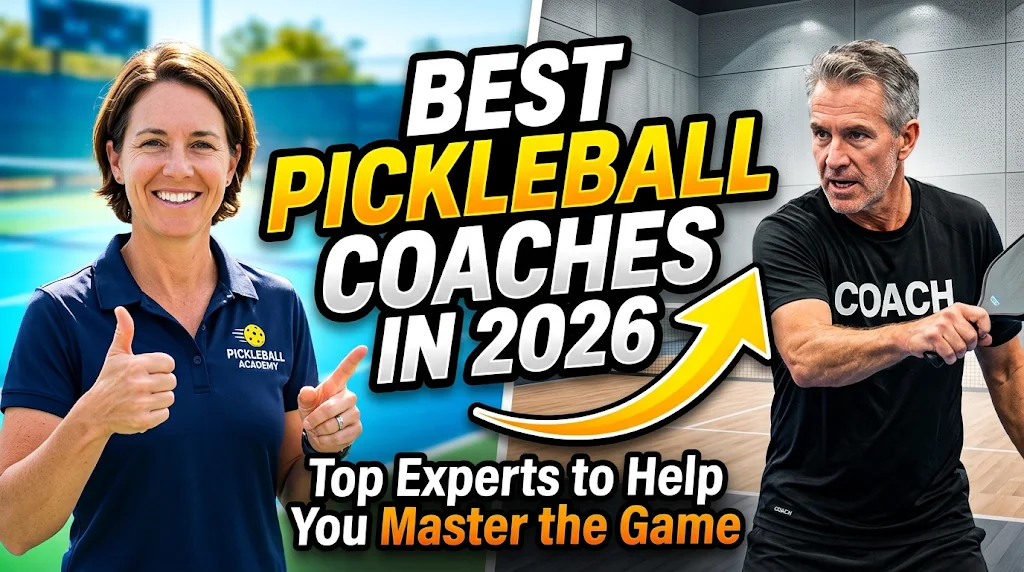
Pickleball is growing fast, and more players than ever want to improve their skills, win competitive matches, and enjoy the game with greater confidence. But buying an expensive paddle or watching random YouTube tutorials will only take you so far. If you really want to improve, learning from an experienced pickleball coach can make a huge difference.
The best pickleball coaches do more than teach you how to hit the ball. They help you understand court positioning, improve your footwork, develop smarter shot selection, master the kitchen line, and build the confidence to handle challenging opponents.
Whether you are a complete beginner, a recreational player, or someone preparing for competitive tournaments, choosing the right instructor can accelerate your progress.
In this guide, we explore some of the best-known pickleball coaches and teaching professionals in 2026, what makes them stand out, and how to find the right coach for your playing level.
Quick Picks: Best Pickleball Coaches
Here is a quick overview of some notable names in pickleball instruction:
| Coach | Best Known For |
|---|---|
| Simone Jardim | Professional-level technique and strategy |
| Tyson McGuffin | Aggressive play and competitive mindset |
| Tony Roig | Beginner-friendly instruction and doubles strategy |
| Sarah Ansboury | Technique, fundamentals, and player development |
| Mark Renneson | Coaching education and structured instruction |
| Kyle McKenzie | Analytical coaching and competitive development |
This is an editorial selection, not an official worldwide coaching ranking. The best choice depends on your location, skill level, and learning goals.
Simone Jardim – Best for Advanced Skills and Competitive Strategy
Simone Jardim is one of the most respected names in professional pickleball. Her experience as an elite competitor and her involvement in player development make her a valuable source of instruction for players who want to take their game seriously.
She is particularly recognized for her technical understanding, court awareness, and ability to explain the tactical side of pickleball.
What Makes Her Stand Out?
- Strong understanding of doubles positioning.
- Advanced shot selection and tactical awareness.
- Experience at the highest levels of professional pickleball.
- Emphasis on consistency, control, and smart decision-making.
Simone is an excellent name to study if you want to understand how high-level players construct points rather than simply hit powerful shots.
Best For: Intermediate and advanced players who want to improve their competitive game.
Tyson McGuffin – Best for Aggressive Playing Style
If you enjoy fast-paced pickleball, aggressive shots, and an energetic approach to competition, Tyson McGuffin is a name worth knowing.
Tyson is a professional pickleball champion who has built a recognizable coaching presence through his camps, instructional content, and training programs.
His coaching approach emphasizes athletic movement, confidence, competitive intensity, and developing a playing style that takes advantage of your strengths.
What Makes Him Stand Out?
- High-energy coaching approach.
- Aggressive playing techniques.
- Competitive mindset and match preparation.
- Training opportunities through McGuffin Signature PB Camps.
- Practical advice from professional competition.
His instructional resources can help players understand how to become more confident and purposeful on the court.
Best For: Players who want to develop an aggressive style and become more competitive.
Tony Roig – Best for Beginners and Doubles Strategy
Tony Roig is a well-known pickleball instructor, educator, and founder of In2Pickle. He has spent years helping players understand the fundamentals and tactical principles of pickleball.
One of his best-known teaching concepts is “Respect the X,” a simple way to understand which partner should take middle shots in doubles.
His teaching approach focuses on making complicated situations easier to understand. Instead of overwhelming players with advanced techniques, he breaks the game into manageable lessons.
What Makes Him Stand Out?
- Clear explanations of pickleball fundamentals.
- Helpful doubles positioning concepts.
- Instructional resources for different skill levels.
- Focus on decision-making and consistency.
- Experience coaching recreational and competitive players.
Tony is especially useful for players who understand the basic rules but struggle with positioning, shot selection, and teamwork.
Best For: Beginners, recreational players, and doubles enthusiasts.
Sarah Ansboury – Best for Fundamentals and Proper Technique
Sarah Ansboury is another respected name in pickleball coaching. Known for her playing experience and instructional work, she has helped players develop stronger fundamentals and more effective techniques.
Her coaching philosophy emphasizes understanding the mechanics behind each shot. Rather than simply telling players what to do, good technical instruction helps them understand why a particular movement works.
What Makes Her Stand Out?
- Focus on proper stroke mechanics.
- Emphasis on balance and body positioning.
- Helpful instruction for developing consistency.
- Experience in competitive pickleball.
- Attention to individual player development.
Players who frequently hit inconsistent shots or struggle with their positioning can benefit from studying her teaching methods.
Best For: Beginners and intermediate players looking to build a reliable foundation.
Mark Renneson – Best for Structured Pickleball Education
Mark Renneson is the founder of Pickleball Coaching International (PCI), an organization dedicated to improving the quality of pickleball instruction.
His work focuses on helping coaches and players understand the sport through structured learning, effective teaching methods, and practical skill development.
What makes Mark particularly interesting is his contribution to coaching education. Better instruction does not happen by accident. Coaches need to understand how people learn, how to identify mistakes, and how to create effective practice sessions.
What Makes Him Stand Out?
- Structured coaching methods.
- Player development and teaching education.
- Focus on effective practice.
- Resources for instructors and players.
- Contribution to professional coaching standards.
Best For: Players who prefer organized learning and coaches interested in improving their teaching skills.
Kyle McKenzie – Best for Analytical Coaching
Kyle McKenzie is associated with Tyson McGuffin’s coaching team and has experience working with competitive pickleball players.
His coaching style emphasizes understanding a player’s strengths, weaknesses, and individual playing style. This analytical approach can be especially useful for players who want more than general advice.
Rather than assuming every player should use the same strategy, effective individualized coaching identifies what works best for each athlete.
What Makes Him Stand Out?
- Analytical approach to player development.
- Attention to individual strengths and weaknesses.
- Competitive playing and coaching experience.
- Focus on smarter decision-making.
- Involvement in professional pickleball training.
Best For: Intermediate and competitive players who want personalized improvement.
How to Choose the Best Pickleball Coach
Finding a good pickleball coach is not simply about choosing the most famous name. The right instructor should understand your current ability, identify your weaknesses, and provide a realistic plan to improve.
Here are the most important things to consider before booking a lesson.
Identify Your Playing Level
Start by understanding where you currently stand.
- Beginner: Learn serving, returning, scoring, basic strokes, and court positioning.
- Intermediate: Improve third-shot drops, dinking, volleys, and doubles strategy.
- Advanced: Focus on consistency under pressure, tactical adjustments, speed-ups, and tournament preparation.
A coach who specializes in beginners may not be the best choice for an advanced tournament player.
Check Coaching Certifications
Professional experience matters, but teaching qualifications matter too.
Look for recognized certifications from organizations such as:
- International Pickleball Teaching Professional Association (IPTPA).
- Professional Pickleball Registry (PPR).
- Pickleball Coaching International (PCI).
- Racket Professional Organization (RPO).
Certifications can demonstrate formal training in instruction and player development. However, they should be considered alongside coaching experience, communication skills, and student feedback.
Ask About Their Coaching Style
Some instructors focus on technical details, while others emphasize strategy, match situations, or physical movement.
Before booking a lesson, ask:
- Do you offer private or group lessons?
- Can you assess my current skill level?
- Do you provide a personalized improvement plan?
- Do you offer video analysis?
- Do you have experience teaching players at my level?
A good coach should be able to explain their teaching approach clearly.
Read Reviews and Ask for Recommendations
Player reviews can help you understand whether a coach is patient, knowledgeable, reliable, and effective.
Ask local pickleball clubs, tournament players, and recreational groups for recommendations. If possible, watch a coaching session before committing to a longer training package.
Compare Pricing and Availability
Coaching costs vary depending on location, experience, lesson duration, and whether you choose private or group instruction.
Private lessons generally provide more individual attention, while group lessons can be more affordable and give you opportunities to practice with different players.
Always confirm the current price, cancellation policy, and lesson schedule directly with the coach.
Private vs. Group Pickleball Lessons: Which Is Better?
Both training options have advantages. Your choice should depend on your budget, experience, and learning preferences.
| Feature | Private Lessons | Group Lessons |
|---|---|---|
| Personal attention | High | Shared |
| Cost | Usually higher | Usually lower |
| Individual feedback | Detailed | Limited |
| Social experience | Limited | High |
| Practice partners | May be limited | Multiple players |
| Best for | Specific weaknesses | General development |
Choose private coaching if you want to correct your technique, prepare for tournaments, or work on a particular weakness.
Choose group coaching if you are learning the game, want more playing opportunities, or enjoy practicing with other people.
Many players get the best results by combining both.
What Skills Should a Good Pickleball Coach Teach?
A quality coaching program should cover more than basic paddle control. Look for an instructor who can help you develop the following skills.
Dinking: Learn to control soft shots near the kitchen line and force your opponents into difficult positions.
Third-Shot Drop: Develop the ability to transition from the baseline to the kitchen without giving opponents an easy attack.
Volleys: Improve your reaction time, paddle positioning, and ability to handle fast exchanges.
Footwork: Learn to move efficiently, maintain balance, and recover after each shot.
Court Positioning: Understand where to stand, when to move forward, and how to work with your doubles partner.
Shot Selection: Learn when to attack, defend, reset, or play a controlled shot.
Mental Strength: Develop patience, confidence, and the ability to make smart decisions under pressure.
These skills separate consistent players from those who rely only on power.
How to Find a Certified Pickleball Coach Near You
You do not necessarily need to travel to a professional training camp to find quality instruction.
Here are practical ways to locate a qualified instructor:
- Search the IPTPA directory: Visit the official International Pickleball Teaching Professional Association website and use its instructor directory.
- Check local pickleball clubs: Many clubs offer private lessons, beginner clinics, and competitive training sessions.
- Explore PPR-certified instructors: Search for professionals with recognized teaching credentials.
- Contact local sports facilities: Recreation centers and dedicated pickleball venues may have qualified instructors.
- Ask experienced players: Local tournament competitors can often recommend coaches with proven teaching experience.
If you are outside the United States, check your national or regional pickleball association for recognized instructors and available coaching programs.
Can You Learn Pickleball Without a Coach?
Absolutely! Many players start by learning through online videos, practice sessions, and recreational matches.
However, self-learning has limitations. You may repeat the same mistakes without realizing what is going wrong.
A qualified coach can identify technical problems, demonstrate better movement patterns, and help you practice the right skills in the right order.
If professional coaching is not available or affordable, combine instructional videos with regular practice. Record your games, review your positioning, and ask experienced players for constructive feedback.
Even one or two lessons can help you identify mistakes that might otherwise take months to correct.
Frequently Asked Questions
Who is the best pickleball coach in the world?
There is no universally recognized number-one pickleball coach. Simone Jardim, Tyson McGuffin, Tony Roig, Sarah Ansboury, and other experienced professionals are notable names, but the best coach depends on your skill level and learning objectives.
How much does a pickleball coach cost?
Prices vary significantly by location, instructor experience, and lesson format. Private coaching generally costs more than group clinics. Contact local instructors for current rates before booking.
Are professional pickleball players good coaches?
Many professional players become excellent instructors because they understand high-level techniques and competitive strategies. However, being a great player and being a great teacher are different skills. Look for someone who can explain techniques clearly and adapt lessons to your ability.
How many lessons do I need to improve?
It depends on your starting level, practice frequency, and goals. Beginners may benefit from a few foundational lessons, while competitive players often use ongoing coaching to refine their game.
Is IPTPA certification important?
IPTPA certification can be a useful indicator of formal coaching education. Its certification levels cover different instructional responsibilities, so check that a coach’s qualification matches your needs.
Can beginners take private pickleball lessons?
Yes. Private lessons can help beginners learn proper grip, serving, returning, footwork, and basic positioning before developing bad habits.
Final Thoughts
The best pickleball coaches help you become more than a better shot-maker. They teach you how to think, move, position yourself, and make smarter decisions during competitive rallies.
Simone Jardim is worth exploring for advanced strategy, Tyson McGuffin for aggressive competitive development, Tony Roig for accessible instruction and doubles concepts, and Sarah Ansboury for technical fundamentals. Mark Renneson and Kyle McKenzie are also worth considering for structured learning and analytical development.
Remember, the most famous coach is not automatically the best coach for you. Find an instructor who understands your goals, communicates clearly, and provides practical feedback.
Start with the fundamentals, practice consistently, and stay open to learning. With the right guidance and effort, your next great pickleball match could be much closer than you think.
Leo Carter is a passionate sports writer and storyteller at SportNestify.com covering cricket, football, hockey, tennis, basketball and more. With a focus on clear insights, engaging analysis, player stories, and the latest sporting trends, Leo turns every game into a story worth following. His goal is simple