Starting pickleball is exciting. You only need a court, a ball, and a paddle to get into the game. But choosing your first paddle? That’s where things can get confusing.
Walk into a sports store or browse online, and you’ll find dozens of paddles with different materials, shapes, weights, and prices. Some promise incredible power, others focus on spin, and a few cost more than a beginner probably needs to spend.
Here’s the good news: You don’t need an expensive professional paddle to become a good pickleball player. You need one that feels comfortable, offers a forgiving sweet spot, and helps you control the ball while learning the basics.
So, what is the best pickleball paddle for beginners?
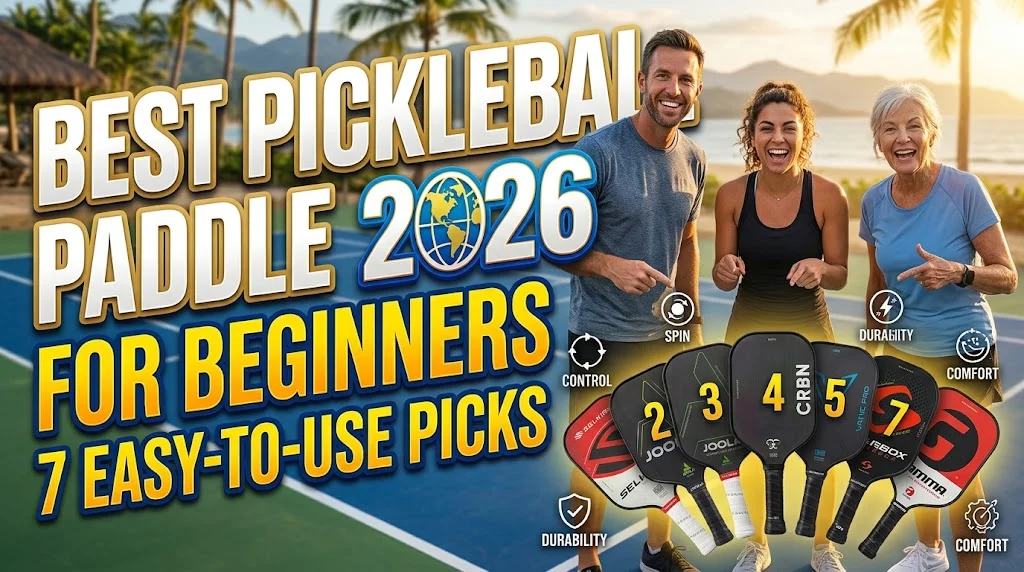
For most new players, the ONIX Z5 Graphite is a dependable starting point because of its wide face, familiar feel, and forgiving playing surface. If you want a more budget-friendly option, consider the Rally Tyro 2. Players looking for a modern control-oriented paddle can also explore the Vatic Pro PRISM Flash.
Let’s explore the best options, what makes each one beginner-friendly, and how to choose the right paddle without wasting money.
Best Pickleball Paddles for Beginners at a Glance
If you don’t have time to read every review, here’s a quick comparison of beginner-friendly paddles worth considering.
| Pickleball Paddle | Best For | Main Advantage |
|---|---|---|
| ONIX Z5 Graphite | Best Overall | Wide face and forgiving feel |
| Rally Tyro 2 | Best Budget | Affordable polymer-core construction |
| Vatic Pro PRISM Flash 16mm | Best for Control | Soft, controlled playing experience |
| Paddletek Phoenix G6 | Best for Comfort | Comfortable feel and softer response |
| Paddletek Bantam TS-5 | Best Lightweight Option | Quick handling and maneuverability |
| 11SIX24 Pegasus Jelly Bean | Best for Forgiveness | Wide shape and generous hitting area |
| VERSIX RAW 6C+ | Best for Future Improvement | Carbon fiber face and spin potential |
Prices and availability vary by retailer. Check the latest specifications and pricing before purchasing.
ONIX Z5 Graphite Best Pickleball Paddle Overall for Beginners
Best for: New players who want a reliable paddle with a large hitting area.
The first few pickleball games can be challenging. You might hit the ball too high, miss the sweet spot, or struggle to control your shots. That’s why a forgiving paddle can make such a difference.
The ONIX Z5 Graphite is a popular choice for beginners because of its widebody shape and comfortable playing feel. Its broad hitting surface gives new players more room to make contact, even when their timing isn’t perfect.
It features a graphite face and a Nomex honeycomb core, providing a responsive and relatively crisp feel. Its familiar design also makes it a practical option for recreational players who want something straightforward.
Why Beginners Will Like It:
- Wide paddle face for easier ball contact.
- Graphite surface for a responsive feel.
- Comfortable grip for regular recreational play.
- Balanced design for learning different shots.
- Suitable for beginners moving toward intermediate play.
Potential Drawback: Its crisp feel may not suit players who prefer a softer, more muted response.
Verdict: If you want one dependable paddle to start your pickleball journey, the ONIX Z5 Graphite deserves a place at the top of your shortlist.
Rally Tyro 2 Best Budget Pickleball Paddle for Beginners
Best for: First-time players who want to spend less without starting with a basic wooden paddle.
Not everyone wants to spend $100 on a sport they have only just discovered. Maybe you’re trying pickleball with friends, joining a local recreational group, or simply figuring out whether you’ll enjoy playing regularly.
The Rally Tyro 2 makes an appealing starting point.
Unlike traditional wooden starter paddles, it uses a composite face and polymer honeycomb core. This construction offers a more modern playing experience at an affordable price.
Its lightweight design also makes it easier to maneuver during rallies, especially when you’re still learning how to position your paddle.
Why Beginners Will Like It:
- Affordable entry-level price.
- Polymer honeycomb core.
- More practical for regular play than many basic wooden paddles.
- Lightweight construction.
- Good option for casual players and families.
Potential Drawback: It doesn’t offer the same premium materials and performance features as more expensive carbon fiber paddles.
Verdict: The Rally Tyro 2 is a smart choice if you want to learn the game without making a big financial commitment.
Vatic Pro PRISM Flash 16mm Best Pickleball Paddle for Beginners Who Want Control
Best for: Players who prioritize accuracy, consistency, and improving their technique.
Power is exciting, but control is what helps beginners become better players.
When you’re learning pickleball, you need to understand how hard to hit the ball, where to place it, and how to keep it from flying beyond the baseline. The Vatic Pro PRISM Flash 16mm is worth considering if those are your priorities.
Its raw carbon fiber surface provides texture that helps players generate spin, while its 16mm core is designed to deliver a more controlled playing response.
The paddle’s hybrid shape also offers a useful balance between hitting area and maneuverability.
You don’t have to be an experienced player to appreciate these features. In fact, learning with a control-focused paddle can help you develop more consistent shots.
Why Beginners Will Like It:
- 16mm core for a controlled feel.
- Raw carbon fiber face.
- Textured surface for spin potential.
- Suitable for developing shot placement.
- Performance that can remain useful as your skills improve.
Potential Drawback: It costs more than basic starter paddles, and its performance features may be unnecessary for someone playing only occasionally.
Verdict: Choose the Vatic Pro PRISM Flash if you’re serious about learning pickleball and want a paddle that can grow with your game.
Paddletek Phoenix G6 Best for Comfortable, Controlled Play
Best for: Recreational beginners who prefer a softer playing experience.
A paddle shouldn’t make learning pickleball feel like hard work. Comfort matters, particularly when you’re playing several games in one session.
The Paddletek Phoenix G6 is a beginner-friendly option worth exploring if you want a comfortable paddle with a controlled response.
Its graphite construction and polymer-based core provide a different feel from traditional wooden paddles. It is designed for players who value consistency and maneuverability rather than simply hitting the ball as hard as possible.
Its approachable design makes it suitable for recreational games and players developing their basic techniques.
Why Beginners Will Like It:
- Comfortable grip.
- Graphite construction.
- Controlled playing response.
- Suitable for recreational matches.
- A practical option for developing consistency.
Potential Drawback: Players looking for maximum power or advanced spin features may prefer a more performance-oriented paddle.
Verdict: The Phoenix G6 is worth considering if comfort and predictable play are more important to you than maximum power.
Paddletek Bantam TS-5 Best Lightweight Pickleball Paddle
Best for: Beginners who want quick paddle movement and easier handling.
If you’ve ever played a racket sport, you know how important it is to move your equipment quickly. Pickleball is no different.
At the kitchen line, rallies can become fast. You need to react quickly, position your paddle, and return the ball without hesitation.
The Paddletek Bantam TS-5 is a lightweight option, generally weighing around 7.0 to 7.5 ounces. Its manageable weight makes it appealing to players who prefer quick handling.
It also offers a responsive feel that can help beginners work on dinks, volleys, and controlled shots.
Why Beginners Will Like It:
- Lightweight construction.
- Easy maneuverability.
- Quick handling during net exchanges.
- Suitable for learning touch shots.
- Comfortable option for players who dislike heavier paddles.
Potential Drawback: Some players may prefer a heavier paddle for additional stability when returning powerful shots.
Verdict: If you want a paddle that feels easy to move and doesn’t feel unnecessarily heavy, the Bantam TS-5 is worth a look.
11SIX24 Pegasus Jelly Bean Best Paddle for Forgiveness
Best for: Beginners who frequently miss the center of the paddle.
Let’s be honest: your first pickleball sessions won’t be perfect.
You’ll hit the ball near the edge, swing too early, and occasionally send an easy shot into the net. That’s completely normal.
The 11SIX24 Pegasus Jelly Bean is designed with a wider shape that prioritizes forgiveness and a generous hitting area.
This can be especially useful for beginners who are still learning to position their paddle correctly. A wider face provides more room for contact and can make the learning experience less frustrating.
It also offers a modern construction that makes it suitable for players interested in improving their control and spin.
Why Beginners Will Like It:
- Wide paddle shape.
- Generous hitting area.
- Forgiving design for developing players.
- Modern construction.
- Suitable for players who want room to improve.
Potential Drawback: Its wider shape may feel less maneuverable than a more compact hybrid paddle.
Verdict: If missing the sweet spot is one of your biggest frustrations, the Pegasus Jelly Bean deserves your attention.
VERSIX RAW 6C+ Best Pickleball Paddle for Beginners Planning to Improve
Best for: Beginners who already know they want to play regularly.
Some players want a simple paddle for weekend fun. Others start playing and immediately become hooked.
If you’re in the second group, buying a paddle that supports your development can be a sensible decision.
The VERSIX RAW 6C+ features a raw T700 carbon fiber face and a 15mm polymer core. Its elongated shape and longer handle can appeal to players who want additional reach and the option of using a two-handed backhand.
The textured carbon surface also offers spin potential, although beginners still need to develop proper technique to use it effectively.
Why Beginners Will Like It:
- Raw T700 carbon fiber face.
- Spin-friendly surface.
- Longer handle.
- Suitable for players transitioning from other racket sports.
- Performance features for developing players.
Potential Drawback: Its elongated shape offers a smaller contact area than many widebody paddles, making it less forgiving for some complete beginners.
Verdict: The VERSIX RAW 6C+ is a good step-up option if you expect to play frequently and want more advanced features from the beginning.
How to Choose the Best Pickleball Paddle for Beginners
Now that you’ve seen some popular options, let’s talk about what actually matters when buying your first paddle.
You don’t need to understand every technical specification. Focus on these five factors.
Paddle Weight
Weight is one of the most important things to consider.
A paddle that’s too heavy can make your arm tired, while an extremely lightweight paddle may feel less stable when returning hard shots.
Here is a simple starting guide:
| Paddle Weight | General Feel | Best For |
|---|---|---|
| Under 7.3 oz | Lightweight | Quick handling |
| 7.3–8.2 oz | Midweight | Most beginners |
| Over 8.2 oz | Heavier | Players who prefer added mass |
For most beginners, a midweight paddle around 7.6–8.2 ounces is a sensible starting point.
Paddle Material
Pickleball paddles come with different surface materials.
- Graphite: Generally lightweight and responsive, making it popular among recreational and competitive players.
- Fiberglass/composite: Often offers a lively feel and can be an affordable option.
- Carbon fiber: Popular for its texture, control characteristics, and spin potential.
- Wood: Cheap and durable, but generally heavier and less comfortable for regular play.
For your first paddle, graphite or composite is perfectly reasonable. You don’t need premium carbon fiber to learn the game.
3. Core Thickness
The core affects how a paddle feels when it contacts the ball.
Common options include 13mm, 14mm, 16mm, and thicker designs.
A 16mm core is a popular choice for players who want a controlled, comfortable response. Thinner cores can offer a livelier feel, while thicker cores often prioritize a softer response.
If you’re unsure, start by comparing 16mm options.
Grip Size and Comfort
Your paddle grip should feel natural in your hand.
A grip that’s too small can make the paddle twist during contact. A grip that’s too large can make it harder to hold and maneuver comfortably.
Many adult paddles use grip circumferences around 4 to 4.5 inches.
Try holding the paddle before purchasing whenever possible. You should be able to maintain a relaxed, secure grip without squeezing too tightly.
Price and Budget
You don’t have to spend hundreds of dollars on your first paddle.
Consider your playing frequency:
- Occasional play: Choose an affordable recreational paddle.
- Weekly play: Invest in a comfortable, quality paddle with a polymer core.
- Frequent play: Consider a more advanced graphite or carbon fiber paddle.
A sensible budget is more important than buying the most expensive model available.
What Is the Best Pickleball Paddle Weight for Beginners?
For most new adult players, a paddle weighing approximately 7.6–8.2 ounces is a practical starting point.
This weight range offers a useful balance between maneuverability and stability.
However, your comfort matters more than following a number. Players with smaller hands or those who prefer quick reactions may enjoy lighter paddles, while others may feel more comfortable with a slightly heavier option.
If possible, test a few paddles before making your final decision.
Should Beginners Buy an Expensive Pickleball Paddle?
Not necessarily.
An expensive paddle may offer advanced materials, improved spin potential, and specialized performance characteristics. But these features don’t automatically make someone a better pickleball player.
As a beginner, your biggest improvements will come from learning the fundamentals:
- Serving consistently.
- Returning the ball with control.
- Understanding court positioning.
- Learning how to dink.
- Improving your footwork.
- Communicating with your doubles partner.
A comfortable paddle that helps you practice these skills is a better investment than a professional-level model you don’t know how to use.
Common Mistakes to Avoid When Buying Your First Paddle
Before clicking the buy button, watch out for these mistakes.
Buying Based Only on Price: The cheapest paddle isn’t always the best value. Extremely basic wooden paddles can feel heavy and uncomfortable for regular play.
Choosing Maximum Power: Beginners often think hitting harder means playing better. In pickleball, control and placement are just as important.
Ignoring Grip Size: An uncomfortable grip can affect your confidence and paddle handling.
Buying an Extremely Heavy Paddle: More weight doesn’t automatically mean better performance. Choose something you can comfortably swing throughout a game.
Following Professional Players Blindly: A paddle designed for an advanced player may not be the right choice for someone learning basic techniques.
Frequently Asked Questions
What is the best pickleball paddle for beginners?
The ONIX Z5 Graphite is a dependable overall choice for beginners because of its widebody shape, graphite face, and familiar playing feel. The Rally Tyro 2 is a more affordable option, while the Vatic Pro PRISM Flash 16mm is worth considering if you prioritize control.
What is the best cheap pickleball paddle for beginners?
The Rally Tyro 2 is a strong budget-friendly option. It offers a composite face and polymer honeycomb core, making it more appealing for regular play than many basic wooden starter paddles.
Should beginners use a graphite or carbon fiber paddle?
Both can work well. Graphite paddles are often lightweight and responsive, while carbon fiber models can offer textured surfaces that help generate spin. Your comfort, budget, and preferred playing feel should guide your decision.
Is a lightweight pickleball paddle better for beginners?
A lightweight paddle can be easier to maneuver, especially during fast exchanges at the net. However, a slightly heavier paddle may offer more stability. Most beginners should try a comfortable midweight option first.
What paddle thickness is best for beginners?
A 16mm core is a popular starting point because it generally provides a controlled, softer response. However, paddle shape, construction, weight, and personal preference also influence performance.
How much should a beginner spend on a pickleball paddle?
You can start with an affordable paddle around $35–$60. If you plan to play regularly, spending approximately $70–$100 can open up more options with better materials and performance features. You don’t need a $200 paddle to learn the game.
Are wooden pickleball paddles good for beginners?
Wooden paddles can be useful for schools, casual games, and group activities. However, they are usually heavier and less comfortable than modern composite or graphite paddles. For regular play, a polymer-core paddle is generally a better investment.
Can I use the same pickleball paddle as I improve?
Absolutely. A good beginner paddle can remain useful as your skills develop. You only need to upgrade when you identify something specific you want, such as more spin, additional power, improved stability, or a different grip.
Final Verdict
Choosing your first pickleball paddle doesn’t need to be complicated.
The right choice depends on your budget, playing frequency, and what feels comfortable in your hand.
Here are our final recommendations:
- Best Overall: ONIX Z5 Graphite.
- Best Budget: Rally Tyro 2.
- Best for Control: Vatic Pro PRISM Flash 16mm.
- Best Lightweight Option: Paddletek Bantam TS-5.
- Best for Forgiveness: 11SIX24 Pegasus Jelly Bean.
- Best for Future Improvement: VERSIX RAW 6C+.
If you’re completely new to pickleball, start with a comfortable, forgiving paddle rather than chasing professional-level power or spin.
Remember, your first paddle doesn’t have to make you a champion. It just needs to make you excited to play another game.
Pick a paddle that feels right, get on the court, and enjoy the game.

Leo Carter is a passionate sports writer and storyteller at SportNestify.com covering cricket, football, hockey, tennis, basketball and more. With a focus on clear insights, engaging analysis, player stories, and the latest sporting trends, Leo turns every game into a story worth following. His goal is simple