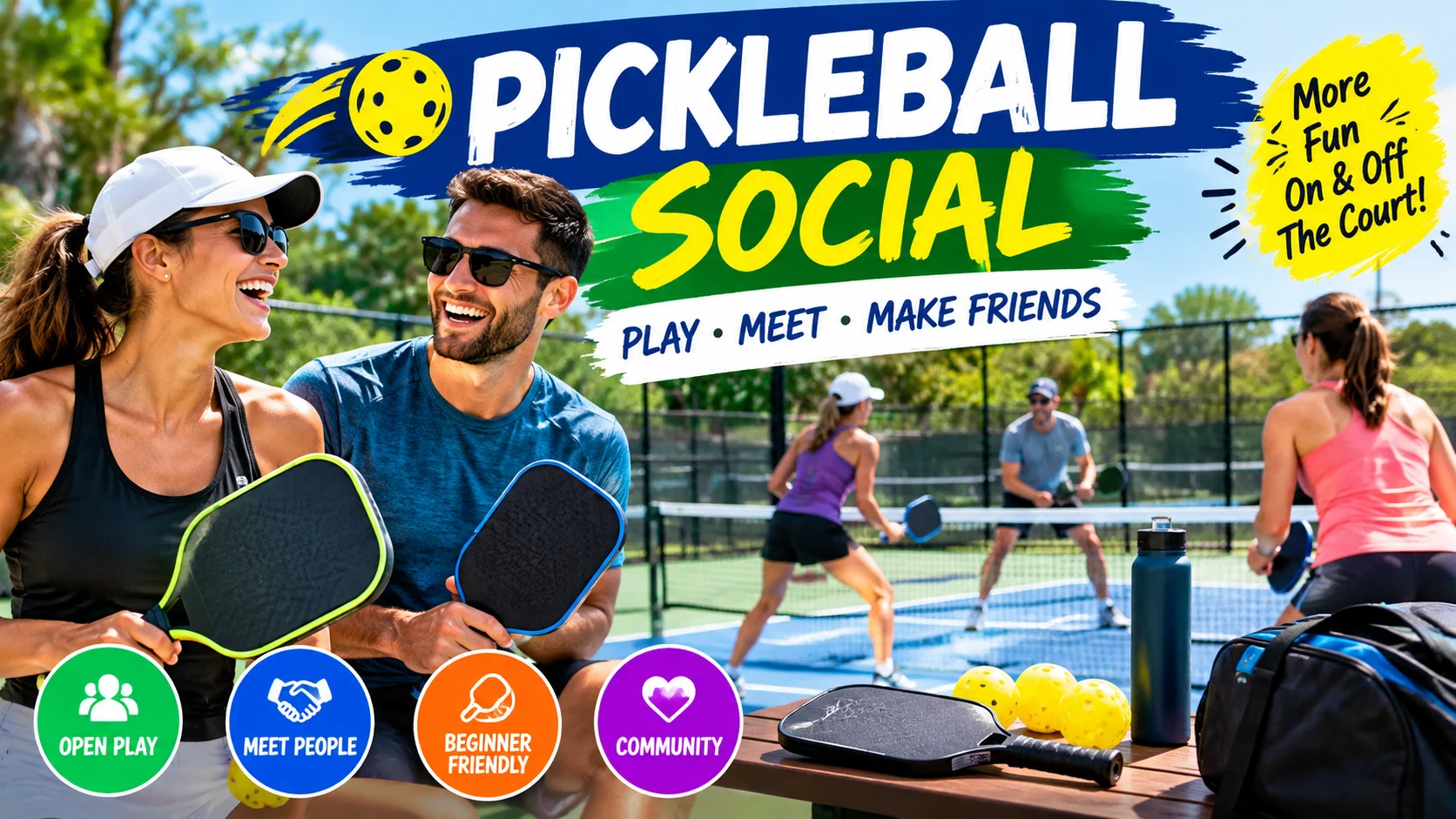
Pickleball is more than a fast-growing paddle sport it is one of the easiest ways to meet people, stay active, and become part of a local community. That is exactly why pickleball social events, groups, and open-play sessions have become so popular.
Whether you are completely new to pickleball, looking for casual games, or hoping to make new friends through the sport, pickleball socials offer a relaxed way to get on the court without the pressure of competitive tournaments.
But what exactly is a pickleball social, how does it work, and where can you find one?
This complete guide covers everything you need to know.
What Is a Pickleball Social?
A pickleball social is a casual pickleball gathering designed primarily for fun, social interaction, and community building rather than serious competition.
Unlike a tournament, where players usually compete for rankings or prizes, a social pickleball session focuses on rotating players, meeting new people, playing several short games, and enjoying the atmosphere.
A typical pickleball social may include:
- Open play
- Rotating doubles games
- Beginner-friendly matches
- Social mixers
- Pickleball clubs
- Community events
- Food and drinks
- Music and entertainment
- Skill-based player groups
- Special themed pickleball nights
The format varies from one location to another, but the goal is usually the same: play pickleball, meet people, and have fun.
Why Are Pickleball Socials So Popular?
One of pickleball’s biggest advantages is its social nature.
The court is relatively small, doubles play is common, and games are usually short enough that players can rotate frequently. That makes it much easier to interact with different people than in many traditional sports.
Easy Way to Meet New People
If you have recently moved to a new city or simply want to expand your social circle, pickleball can be a surprisingly effective option.
You do not have to arrive knowing anyone. Social sessions are specifically designed to mix players together.
Great for Beginners
Many social pickleball events welcome players with little or no experience.
Instead of worrying about joining an established competitive group, beginners can learn the basics, practice rallies, and gradually become comfortable on the court.
Exercise Without Feeling Like a Workout
Pickleball involves movement, quick reactions, balance, and coordination.
Because you are focused on the game and conversation, exercise can feel more like entertainment than a traditional gym session.
Community Atmosphere
Pickleball communities often develop their own social culture. Players may organize dinners, weekend games, leagues, charity events, or informal gatherings outside the court.
That community feeling is a major reason people keep coming back.
Pickleball Social vs. Pickleball Tournament
The two can look similar, but their purposes are different.
| Pickleball Social | Pickleball Tournament |
|---|---|
| Mainly for fun | Mainly for competition |
| Casual atmosphere | Competitive atmosphere |
| Players often rotate | Fixed teams are common |
| Beginners may be welcome | Skill levels are usually structured |
| Socializing is encouraged | Results are important |
| Usually low pressure | More performance-focused |
If your main goal is to meet people and enjoy the sport, a pickleball social is usually the better starting point.
If you want to test your skills and compete seriously, a tournament may be more appropriate.
What Happens at a Pickleball Social?
Your first social event may seem confusing if you do not know the format. Fortunately, most sessions are straightforward.
A typical event might look like this:
Step : Check In
Players arrive, register, and find out how games will be organized.
Some venues use a sign-up list, while others use a court rotation system.
Step : Warm Up
Players usually spend a few minutes warming up with their partners or other participants.
This is also an easy opportunity to introduce yourself.
Step : Start Playing
Games are generally short, and players may rotate after each game.
Depending on the event, you could play with several different partners during one session.
Step : Socialize
Between games, players often talk, grab refreshments, or watch other matches.
This is where the “social” part really comes alive.
Step : Keep Playing or Join Future Events
If you enjoy the experience, you can return for another social, join a club, or participate in organized leagues.
What Should You Bring to a Pickleball Social?
You do not need a huge amount of equipment.
Essential Items
Pickleball paddle: Choose a comfortable paddle that suits your experience level.
Pickleballs: Some venues provide balls, but carrying a few of your own is useful.
Court shoes: Pickleball involves lateral movement, so proper court shoes can provide better support than ordinary running shoes.
Water: Staying hydrated is important, especially during longer sessions.
Comfortable clothing: Wear breathable athletic clothing that allows unrestricted movement.
Optional Extras
You might also bring:
- Towel
- Sunscreen
- Hat
- Extra shirt
- Grip tape
- Small snack
- Paddle cover
- Phone
If you are attending your first event, check the venue’s rules beforehand. Some locations provide paddles and balls for beginners.
How to Find a Pickleball Social Near You
Finding a local pickleball social is often easier than finding a traditional sports club.
Start by searching online for phrases such as:
- “pickleball social near me”
- “pickleball social club”
- “pickleball open play”
- “pickleball social events”
- “beginner pickleball social”
- “pickleball doubles near me”
- “pickleball community”
Local recreation centers, indoor sports facilities, community centers, and dedicated pickleball venues may also organize regular events.
Social media groups can be particularly useful because local players frequently post upcoming games and informal meetups.
What Is Pickleball Open Play?
Open play is one of the most common forms of social pickleball.
Instead of registering as a permanent team, players arrive during a scheduled period and rotate onto available courts.
The exact rules differ by venue, but the concept is simple:
Show up → join the rotation → play → rotate → meet more players.
Open play is especially useful for people who do not already have a regular partner.
Is Pickleball Social Good for Beginners?
Absolutely.
In fact, social play can be one of the best ways to start.
You can learn the rules while playing, observe experienced players, and gain confidence without immediately entering a competitive environment.
However, it is smart to check the advertised skill level before attending.
Some social sessions are designed for complete beginners, while others attract intermediate or advanced players.
If you are unsure, contact the organizer and ask:
“Is this session suitable for someone who is new to pickleball?”
That simple question can save you from joining a session that is too advanced.
Pickleball Social Etiquette: What You Should Know
Good etiquette makes social pickleball enjoyable for everyone.
Respect the Rotation
If the venue uses a rotation system, follow it fairly. Avoid repeatedly jumping ahead of other players.
Introduce Yourself
A simple “Hi, I’m new here” is usually enough.
You will probably find that other players are happy to welcome you.
Don’t Over-Correct Beginners
If someone is learning, helpful advice is great but constant criticism can make the game uncomfortable.
Offer tips when appropriate and keep the atmosphere positive.
Retrieve Balls Safely
If another court is playing, wait for the appropriate moment before walking behind or across it.
Keep Games Moving
Pick up balls quickly and be ready when it is your turn.
Be Competitive Without Being Difficult
A social game can still be exciting. You can try to win while maintaining a friendly attitude.
Remember: the point is not just the score.
How to Make Friends at a Pickleball Social
Walking into a room full of strangers can feel awkward. Fortunately, pickleball gives you natural conversation starters.
Try simple questions such as:
- “How long have you been playing?”
- “Is this your first time here?”
- “Do you usually play doubles?”
- “Are there any beginner sessions?”
- “Do you play here regularly?”
- “Where else do you usually play?”
You already have one thing in common the sport.
That makes starting conversations much easier.
Pickleball Socials Are More Than Just Games
The best pickleball communities often extend beyond the court.
Some groups organize:
- Weekend meetups
- Charity events
- Beginner clinics
- Club dinners
- Barbecue gatherings
- Holiday parties
- Team leagues
- Fundraising tournaments
- Outdoor recreational activities
This is one reason pickleball has developed such a strong community reputation.
You may arrive expecting to play for an hour and leave with a group of new friends.
Pickleball Social for Different Age Groups
One of pickleball’s biggest strengths is accessibility.
You will find social sessions aimed at different age groups and abilities, including:
- Young adults
- Families
- Older adults
- Mixed-age groups
- Beginners
- Intermediate players
- Advanced recreational players
The important thing is finding a group that matches your preferred pace and atmosphere.
Some groups are relaxed and conversation-heavy, while others play at a faster pace.
Can You Go to a Pickleball Social Alone?
Yes and this is one of the biggest benefits.
You do not necessarily need a partner.
Many open-play and social events are specifically designed for individual players. Rotating formats allow you to meet different partners during the session.
If the event requires pre-arranged teams, however, you should check the registration details before attending.
How to Make Your First Pickleball Social Less Awkward
Feeling nervous before your first session is completely normal.
Here are a few ways to make it easier:
Arrive early. You will have more time to understand the setup.
Tell the organizer you’re new. They can usually explain the rotation system.
Start with casual conversation. You don’t need to impress anyone.
Don’t worry about making mistakes. Everyone was a beginner once.
Focus on having fun. Your skill level will improve naturally with practice.
The first few minutes may feel unfamiliar. After your first game, it usually becomes much easier.
Social Pickleball Tips for Better Games
Want to become the player everyone enjoys partnering with?
Focus on these simple habits:
- Communicate with your partner.
- Call balls clearly.
- Avoid blaming teammates.
- Keep rallies going instead of always hitting for winners.
- Respect opponents.
- Help new players feel included.
- Stay positive after mistakes.
- Rotate fairly.
Being a great social player is not only about hitting powerful shots. Good sportsmanship makes you a better teammate.
Is Pickleball Social or Competitive?
It can be both.
Pickleball exists on a spectrum.
At one end, you have relaxed games where players chat between points. At the other, you have highly competitive tournaments with advanced players.
Social pickleball generally sits toward the relaxed side, but that does not mean players cannot take the game seriously.
The best sessions often find a balance: competitive enough to be exciting, casual enough to remain enjoyable.
Pickleball Social Ideas for Clubs
If you run a pickleball club, there are many ways to make your social events more engaging.
Consider hosting:
Beginner Night
Create a welcoming session specifically for people learning the game.
Partner Shuffle
Rotate partners every few games so everyone meets new players.
Theme Night
Try themes such as retro night, holiday pickleball, or team colors.
Social Mixer
Combine short games with snacks and conversation.
King/Queen of the Court
Players rotate through courts based on wins and losses.
Charity Social
Combine pickleball with fundraising for a local cause.
These formats can attract both regular members and newcomers.
The Biggest Benefit of Pickleball Social
The obvious benefit is playing pickleball.
But the deeper benefit is connection.
People join because they want exercise. They return because they enjoy the people.
That is what makes pickleball socials different from simply booking a court with friends. A social event creates an opportunity to build a community around the sport.
Frequently Asked Questions
What does pickleball social mean?
Pickleball social usually refers to a casual pickleball event focused on playing, meeting people, and enjoying a friendly community atmosphere rather than serious competition.
Do I need a partner for pickleball social?
Usually not. Many open-play and social sessions allow individual players to join and rotate partners.
Is pickleball social good for beginners?
Yes. Many social sessions welcome beginners, although you should check the event’s advertised skill level before attending.
What should I wear to pickleball social?
Wear comfortable athletic clothing and supportive court shoes. Bring water and, if playing outdoors, consider sunscreen and a hat.
How long does a pickleball social last?
It depends on the organizer. Sessions can range from about one hour to several hours.
Is pickleball social expensive?
Costs vary. Some community sessions are free, while clubs and facilities may charge court, membership, or event fees.
Can I make friends through pickleball?
Absolutely. Social pickleball is specifically designed to bring players together, and rotating partners create natural opportunities to meet new people.
What is the difference between pickleball social and open play?
Open play generally describes a court format where players rotate in and out, while a pickleball social can include open play plus additional social activities. The terms are sometimes used interchangeably.
Can I attend a pickleball social alone?
Yes. Many social sessions are designed for individual players and do not require you to bring a partner.
Final Thoughts
Pickleball social is where the sport’s community spirit really comes alive.
You can improve your game, get exercise, meet new people, and enjoy friendly competition all in the same session.
If you are new to pickleball, don’t wait until you feel like an expert. Find a beginner-friendly social or open-play session, bring your paddle, and step onto the court.

Theo Bennett is a passionate sports writer and storyteller at SportNestify.com covering cricket, football, hockey, tennis, basketball and more. With a focus on clear insights, engaging analysis, player stories, and the latest sporting trends, Leo turns every game into a story worth following. His goal is simple